

This post contains affiliate links. Full disclosure at the end.
How time flies.
Another year is almost here, and perhaps you can feel both the hope and the tiredness of it. You want 2027 to be different. You also remember the lists that faded by February.
Most of us already have more than enough workbooks and New Year planners. The trouble is not the plan itself. It is staying with it once the first excitement has worn off, and life has become ordinary again, or hard.
I made this workbook for that part, based on the principles of Dynamic Thought by Henry Thomas Hamblin. It gives you a simple daily place to return to, and a way to keep going when the sky is falling. You do not need a perfect morning routine, and you do not need a long list of resolutions. A few honest minutes a day, and a plan you can actually stay with, can make 2027 a turning point.
🌿 Why Most New Year Plans Fade
It is rarely a lack of hope. It is usually one of these three things.
- Too many goals. When everything is important, the mind cannot hold a clear picture, and the heart gets tired.
- No daily place to return to. A plan written once, in a burst of January energy, has nowhere to live in ordinary weeks.
- No plan for hard days. Life will get messy. Without a way to steady yourself, one difficult week can feel like the end of the whole year.
The answer is not more pressure. It is a simpler method, written down, that you can keep when you are busy, unsure or discouraged.
If you would like to look back before you look forward, my year-end life audit is a gentle place to begin.
💛 Built on Dynamic Thought
This workbook is built on the principles of Dynamic Thought by Henry Thomas Hamblin, a book I have read more than ten times and still return to. His writing is about building the strong character that success rests on, and staying with it.
Hamblin wrote, “You cannot fail in the long run if you will persist and persevere.” That is the spirit of these pages.
✨ How to Keep Going: 6 Simple Steps
Step 1. Look back kindly, then choose what to carry forward
Before you write a single goal for 2027, spend one unhurried evening with the year that is ending. What did you create, learn, give and overcome? What no longer belongs?
Do this without blame. The point is not to scold yourself. The point is to see clearly, so your new plan is honest.
You may also like this year-end reflection guide if you want a few simple questions to sit with.
Step 2. Write your highest ideal, then a few concrete goals
Start with the feeling of the life you are growing towards: the kind of person you want to be, and the kind of year that would honour that. This is your highest ideal. It is the picture you will hold, even when details change.
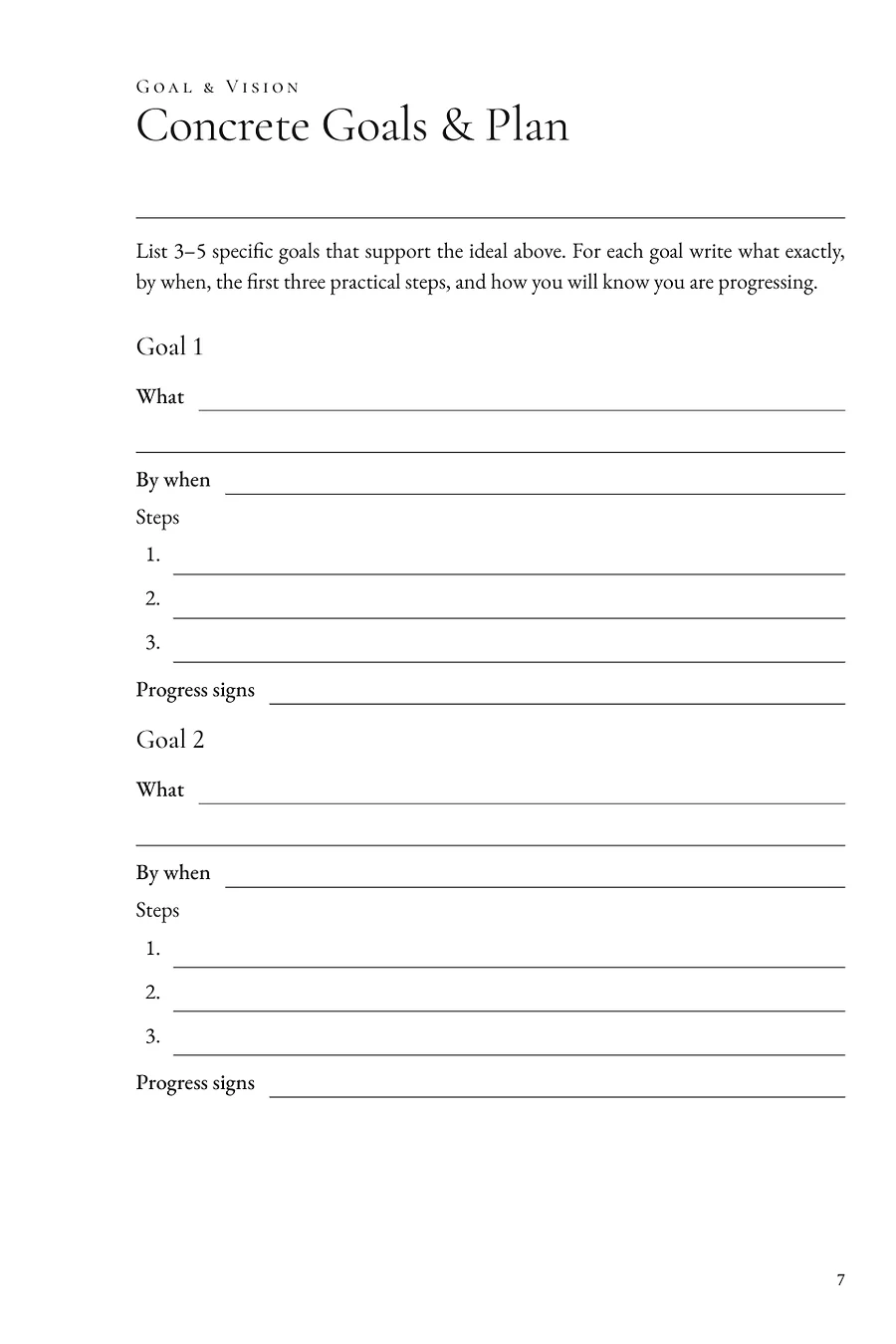
Then write three to five specific goals that support it. For each one, add a simple “by when”, the first three practical steps, and how you will know you are progressing.
A short list you can remember is stronger than a long list you will avoid.
Step 3. Make a personal affirmation and a clear inner picture
Once the goal is on the page, give it a sentence you can say and a picture you can see.
Your affirmation should feel like you, in the present tense, as the person who is already living this way. Your inner picture should be specific and calm: not a frantic wish, but a scene you can return to.
This is the seed of the whole year. Later, when life is noisy, you will come back to this sentence and this picture, not to a new plan.
If you like working with images as well as words, my guide to making a vision board that actually works can sit beside this step.
Step 4. Practise a small daily minimum
This is how a plan becomes a year.
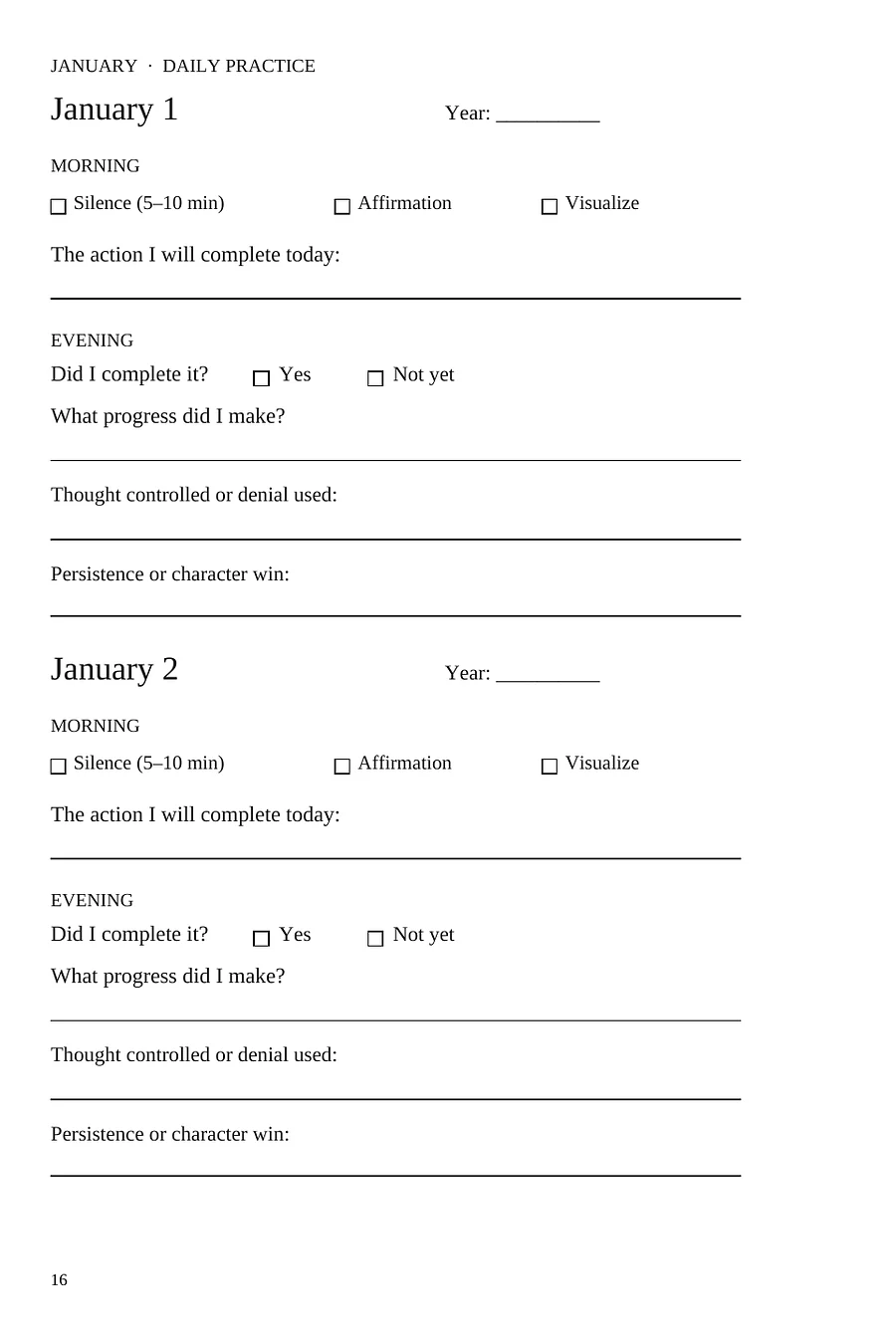
Each day, do four simple things: sit in the Silence for five to ten minutes, speak or write your affirmation once, bring your success picture to mind once, and complete one action that serves your goal. In the evening, look back kindly: did I do it? What progress did I make? Where did I show persistence or character?
Five honest minutes are better than an abandoned perfect plan.
Step 5. Plan the month, and review the week
At the start of each month, write your main goal again, choose a focus (a character quality or a practice), and note three small milestones. A simple habit tracker helps you see the days you sat in the Silence, spoke your affirmation and pictured your success.
Once a week, pause. What moved? What needs a smaller next step? Adjust the plan if you must. Do not keep changing the vision.
This is how you stay with your year as a living thing, not a promise you made once in January and never visited again.
Step 6. When the sky is falling, take the next practical step
Some days will be hard. A plan that cannot meet those days is not a real plan.
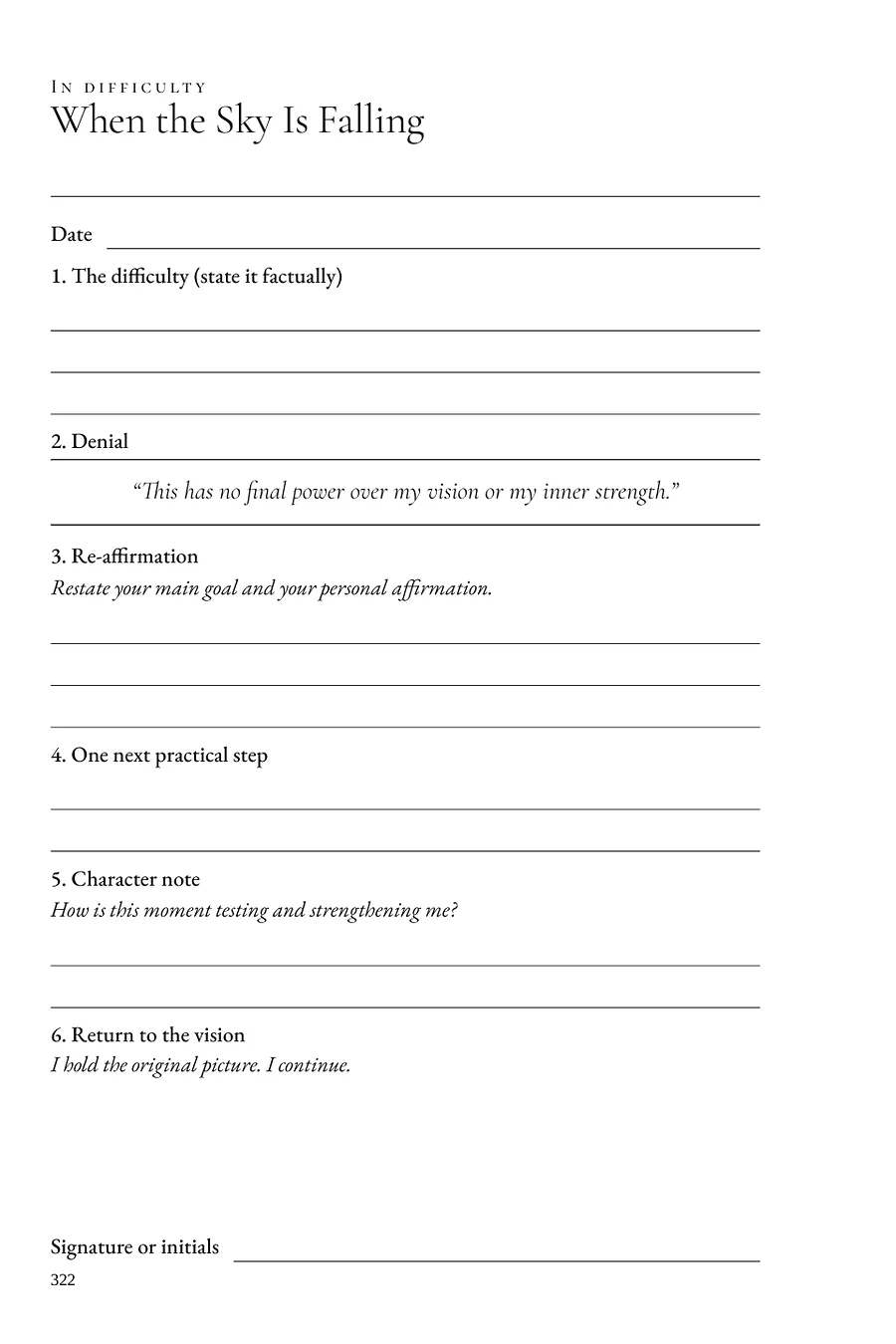
On those days, write the difficulty down factually. Remind yourself, gently, that it does not have the final word over your vision or your inner strength. Restate your goal and your affirmation. Then choose one next practical step, however small, and take it.
This is character building in ordinary life: not a perfect year, but a steady heart.
💛 The Journal I Made for This Kind of Year
These steps are the method inside My New Year: Success and Character Building Workbook. I made it as a year-long guided journal, so you have a daily place to practise, and a way to keep going when the sky is falling.
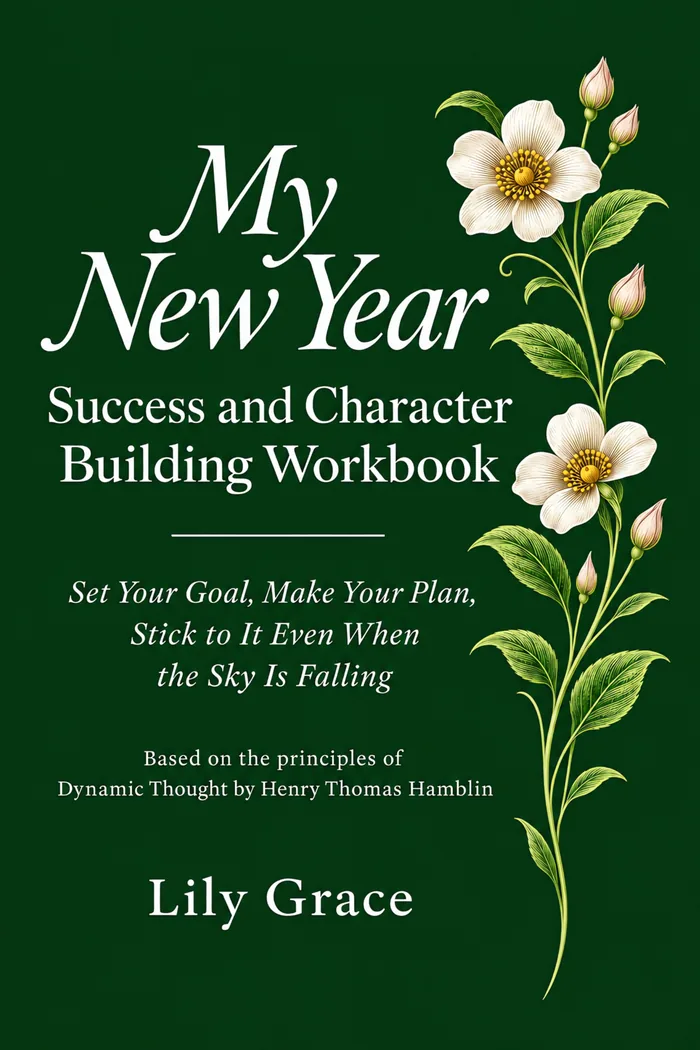
Inside you will find a Goal and Vision section, twelve monthly modules across four quarters, undated daily pages from January to December, weekly and monthly reviews, and “When the Sky Is Falling” pages for the hard days. It is a clean 6 by 9 inch format, 332 pages, with room to write. The year is left blank, so you can begin in any year.
Keep going, gently and steadily, and success will surely be yours.
👉 My New Year: Success and Character Building Workbook, on Amazon
🌟 Staying With Your Year: FAQ
When should I start?
Whenever you are ready. The daily pages have the month and day, with a blank line for the year, so you can begin in December, on 1 January, or later. An extra page is included for 29 February.
What if I am not sure of my big goal yet?
Begin with the highest ideal and one modest, honest goal. Clarity often comes after a week or two of daily practice, not before it. You can refine the steps. Keep the vision steady.
How is this different from ordinary new year resolutions?
Resolutions are often a list. A success journal is a daily practice: a goal, a plan, a few minutes of inner work, one action, and a way to continue when the sky is falling. That is how a year lasts beyond January: not a longer list, but a way to keep going.
Do I need to know Henry Thomas Hamblin’s work first?
No. The pages turn his ideas into simple prompts. If you later wish to read Dynamic Thought itself, you will recognise the principles, but you can use the journal without that background.
🌸 A Soft Closing for Your Heart
You do not need a dramatic fresh start.
You only need one clear picture, one next step, and the willingness to return tomorrow.
May your goal feel true in your hands.
May your plan be simple enough to keep.
May you stay with it, even on the days that test you.
And may this be a year of quiet, steady becoming.
Which step will you try first? Please leave a comment and tell me. I will read every one.
With warmth and gratitude,
Lily Grace
🌿 More Guides You May Love
✨ A Year-End Life Audit
Eight gentle steps to look back at this year and choose what to carry forward.
👉 How to Do a Year-End Life Audit Before 2027
✨ Year-End Reflection
Simple questions to close the year with honesty and hope.
👉 Want a Brighter New Year in 2027? Do Your Year-End Reflection
✨ A Vision Board That Works
How to make a vision board that helps you feel the year you are calling in.
👉 How to Make a Vision Board That Manifests Results
✨ All My Books
My books, in one place. 👉 Books by Lily Grace
Affiliate disclosure: this post contains affiliate links. If you buy through them, I may earn a small commission at no extra cost to you. As an Amazon Associate I earn from qualifying purchases. Thank you for supporting Raise Yourself Today.


